How Professional Tree Surgery Can Help Manage Storm-Damaged Trees
Strong winds, heavy rainfall and severe weather can place considerable strain on trees, sometimes causing damage that is not immediately obvious. Branches may split, limbs can become unstable and root systems may be affected by saturated ground. Even a tree that appears to remain standing after a storm could present a risk if its structure has been weakened.
For property owners in Loddon, Norfolk, arranging a professional assessment after severe weather can help identify potential hazards and determine what work is needed. Professional tree surgery provides a practical way to manage storm-damaged trees, protect surrounding areas and support the long-term health of trees where recovery is possible.
Common Types of Storm Damage to Trees
Storm damage can affect different parts of a tree, and the type of damage often determines the most appropriate course of action.
One common problem is broken or hanging branches. High winds can snap limbs, leaving them partially attached to the tree. These branches may fall unexpectedly, particularly during further periods of bad weather.
Other forms of damage include:
- Split branches and stems: Strong winds can cause branches to crack or split, weakening the tree’s structure.
- Damaged crowns: Large sections of the canopy may be broken or torn away, affecting the tree’s balance and appearance.
- Exposed or damaged roots: Waterlogged soil and strong winds can contribute to root movement or damage, reducing the tree’s stability.
- Leaning trees: A noticeable change in the tree’s position may indicate that the root plate or supporting soil has shifted.
- Fallen trees: Some trees may be completely uprooted or have their main stems broken during severe weather.
Recognising these warning signs is important, as damaged trees can sometimes deteriorate further if the underlying problems are not addressed.
Why a Professional Tree Assessment Matters
Not all storm-damaged trees need to be removed. In some cases, targeted pruning or the removal of specific damaged branches may be enough to make the tree safer while retaining its overall structure.
A professional tree surgeon can assess the extent of the damage, considering the condition of the trunk, branches, crown and root system. They can also look for less obvious problems, such as cracks, hanging limbs and signs of movement around the base.
This assessment helps establish whether the tree can recover with appropriate maintenance or whether more substantial work is necessary. It also reduces the risk of unnecessary cutting, which can place additional stress on an already weakened tree.
Where a tree has become unstable or poses an immediate danger, it is important to keep people away from the affected area and arrange professional assistance. Homeowners should not attempt to climb damaged trees or remove large hanging branches themselves.
How Tree Surgery Helps Manage Storm Damage
The appropriate tree surgery work depends on the species, size, condition and extent of the damage. Professional techniques can address immediate hazards while helping preserve healthy parts of the tree wherever practical.
Removing Broken and Dangerous Branches
Damaged branches can be removed through careful pruning to reduce the risk of them falling. Cuts need to be made in suitable positions to avoid unnecessary damage to the remaining tree and encourage better wound development.
Removing compromised limbs can also help restore a more balanced crown, particularly where storm damage has left the tree uneven.
Crown Reduction and Structural Management
Where a tree has suffered significant canopy damage, selective crown reduction may sometimes help manage its size and shape. This involves shortening suitable branches while retaining the tree’s natural form.
However, crown reduction is not suitable for every damaged tree. The amount of material removed should be carefully considered, as excessive pruning can create further stress and affect future growth.
Sectional Tree Dismantling and Removal
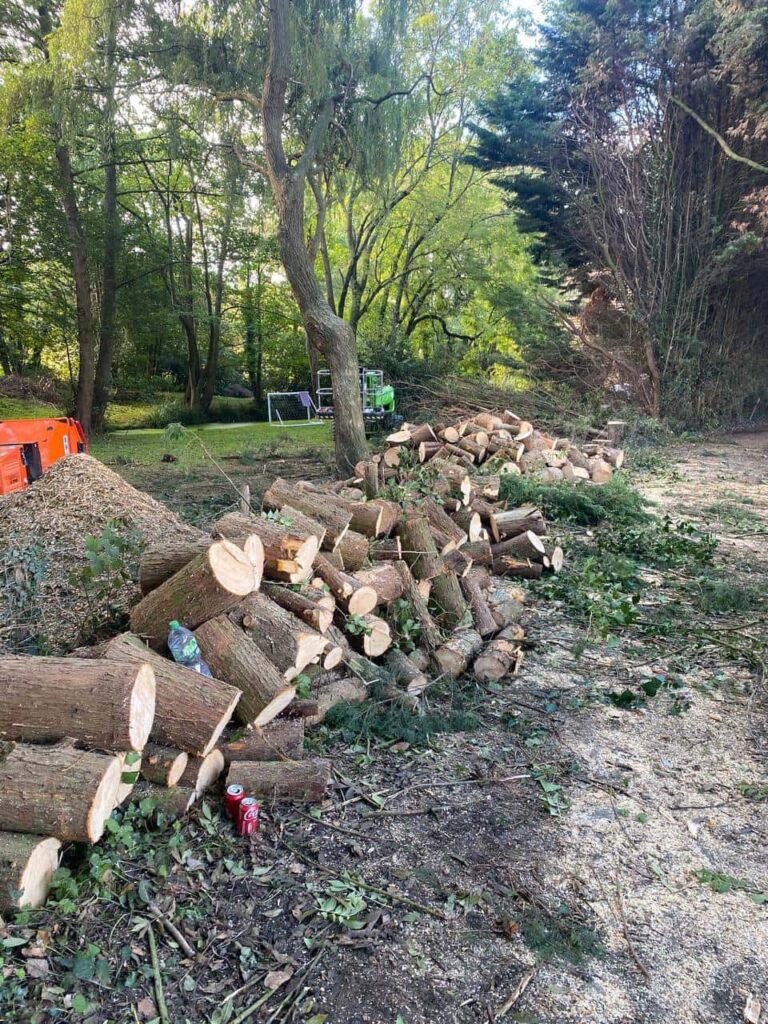
If a tree has become severely damaged, unstable or unlikely to recover, removal may be the safest option. In restricted spaces, sectional dismantling allows a tree to be taken down in controlled sections rather than felled in one piece.
This approach is particularly useful where nearby buildings, fences, garden features or other obstacles limit the available working space. A qualified tree surgery team can determine the safest method based on the tree’s condition and surroundings.
Why Prompt Attention Can Prevent Further Problems
Storm-damaged trees can remain vulnerable after the initial weather event. Cracked branches may weaken further, and damaged root systems can affect stability over time. Further strong winds or heavy rainfall may increase the likelihood of additional breakage.
Prompt professional attention helps identify these concerns before they develop into more serious problems. It also allows suitable maintenance to be carried out while healthy parts of the tree can still be retained.
For properties in Loddon, Norfolk, regular tree inspections following periods of severe weather can be particularly useful where mature trees are close to homes, driveways, paths or garden boundaries.
Supporting Tree Health After Storm Damage
Once immediate hazards have been dealt with, ongoing care may help a surviving tree recover. The type of aftercare required depends on the extent of the damage and the tree’s overall condition.
Avoiding unnecessary pruning is important, as trees need sufficient healthy foliage to support their growth. It is also worth monitoring the tree for changes such as further branch dieback, new cracks, fungal growth or movement around the base.
A tree surgeon can recommend suitable follow-up maintenance and advise whether further assessment is needed. This helps ensure that storm damage is not treated as a one-off issue when the tree may require continued attention.
Conclusion
Storm damage can leave trees with broken branches, weakened structures and compromised root systems. Professional tree surgery helps identify these problems and determine whether pruning, crown management or complete removal is the most appropriate solution.
For property owners in Loddon, Norfolk, Loddon Tree Surgeons can provide professional assistance with managing storm-damaged trees and maintaining safer outdoor spaces. If a tree on your property has been affected by severe weather, get in touch to discuss an assessment and the most suitable work required.
Call us on: 01508 505 537
Click here to find out more about Loddon Tree Surgeons
Click here to complete our contact form and see how we can help with your tree needs.